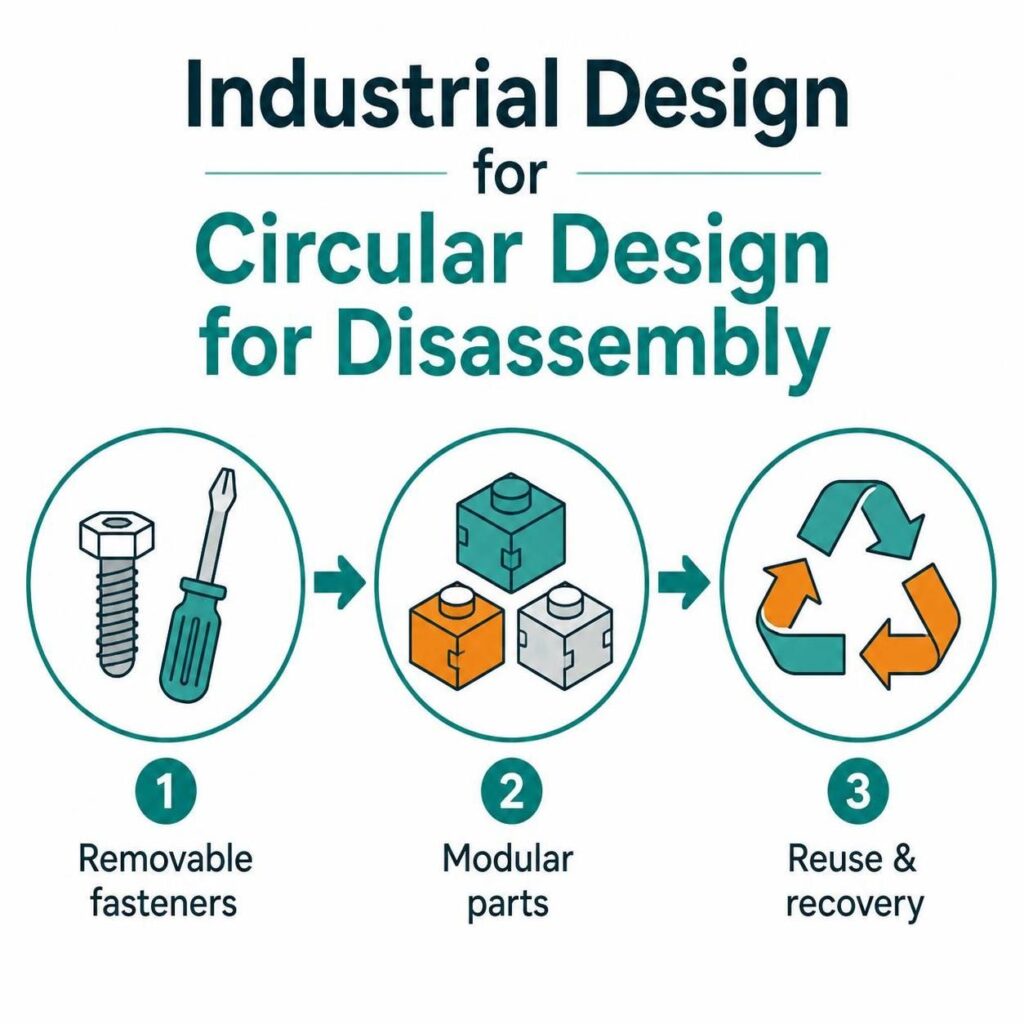
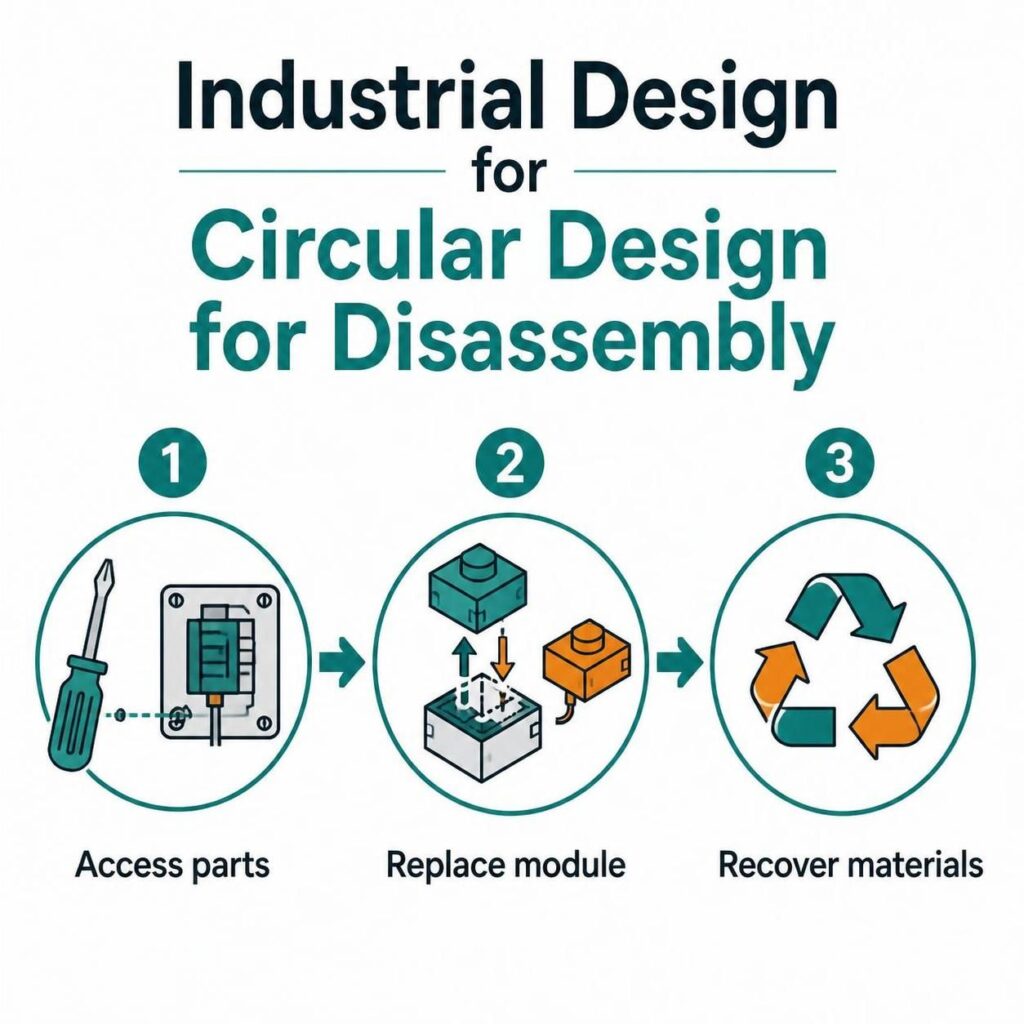
“Industrial design for circular design isn’t just a trend—it’s a practical way to build products that last longer, are easier to repair, and can be taken apart so valuable materials can come back into use. When you design with disassembly in mind, you make it simpler for people (and systems) to recover parts instead of throwing the whole product away.”
What circular design for disassembly means
Circular design for disassembly means you plan for the end of a product’s life from the very beginning. Instead of “one-time use,” the goal is to create a product that can be separated into parts that are reusable, refurbishable, or recyclable.
Good industrial design supports this by making components easy to identify, access, and remove. It also helps ensure that the product can be serviced without destroying parts during repair.
Why industrial design matters for circular products
Industrial design affects how people interact with a product, but it also affects what happens later—during maintenance, repair, and recycling. If a product is hard to open, damaged during teardown, or full of glued-together materials, disassembly becomes expensive or impossible.
That’s why industrial design is a key tool for circular design for disassembly. It helps you choose shapes, joints, fasteners, and materials that support real-world recovery—not just good intentions.