Crafting Innovative Product Designs

Crafting innovative product designs starts with knowing your users, your market, and the problem you want to solve. If you want a product that stands out, you need research, clear ideas, fast testing, and strong refinement. Innovation is not just about making something look new. It is about building something useful, desirable, and better than what already exists.
Start with Market and User Research
Good design begins with real insight. Study your users so you can understand their goals, habits, and pain points.
Use methods like:
- Surveys
- Interviews
- Focus groups
- Data analytics
For example, if you are designing a fitness app, you may find that users care more about social challenges than custom workout plans. That kind of insight helps you make smarter design choices.
It also helps to study competitors. Look at what they do well and where they fall short. That gives you a clear path for differentiation.
Find Inspiration for New Ideas
Once you know the market, look for inspiration. Study successful products, but also look beyond your industry.
Nature, art, and everyday objects can all spark ideas. A famous example is Velcro, which was inspired by burrs sticking to animal fur.
A useful starting point is to ask:
- What problem am I solving?
- What makes current products frustrating?
- What could be simpler, faster, or more useful?
For a broader understanding of user-centered design, you can review the principles from Nielsen Norman Group and IDEO’s design thinking approach.
Brainstorm and Shape the Concept
Now it is time to generate ideas. Do not judge them too early.
Use tools like:
- Mind maps
- Sketches
- Team workshops
- SCAMPER
- Design thinking exercises
Try to create as many ideas as possible first. Then sort them by:
- Feasibility
- User value
- Business potential
This keeps the team focused on ideas that are both creative and realistic.
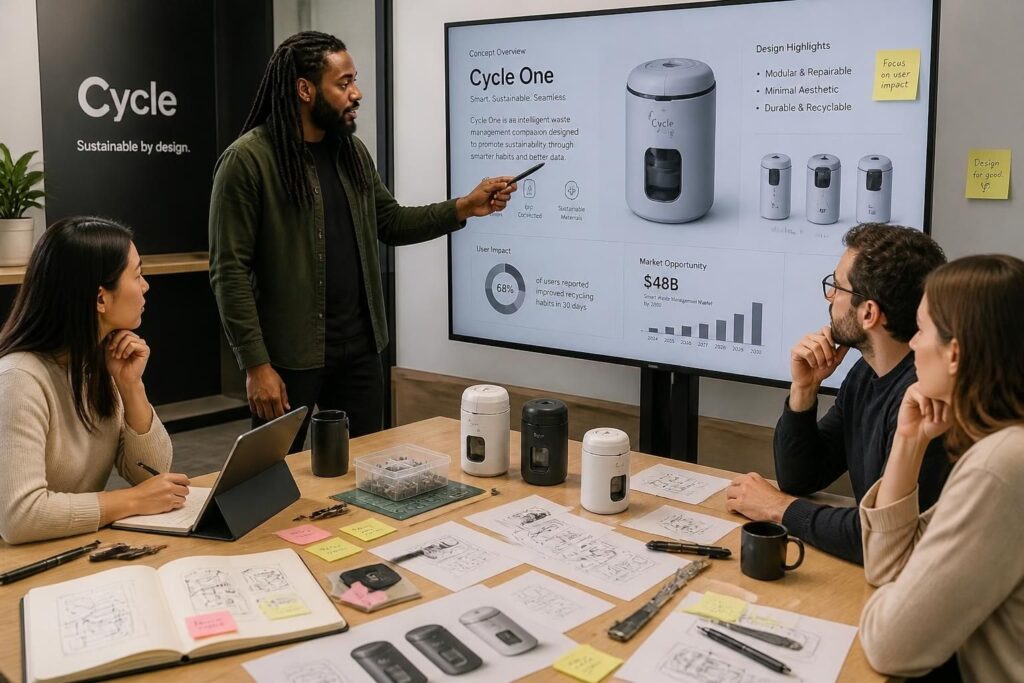
Build and Test Prototypes
A prototype turns an idea into something tangible. It can be a sketch, a wireframe, a mockup, or a physical model.
Test it with real users as soon as possible. Watch where they get stuck and what they like most.
A simple workflow is:
- Create a rough prototype
- Test it with users
- Gather feedback
- Improve the design
- Test again
This process saves time and helps you avoid expensive mistakes later.
Collaborate and Refine
Great products are rarely built alone. Designers, engineers, marketers, and stakeholders all bring useful feedback.
Early collaboration helps you catch technical issues, improve usability, and make the product stronger. Keep iterating until the design feels clear, useful, and polished.
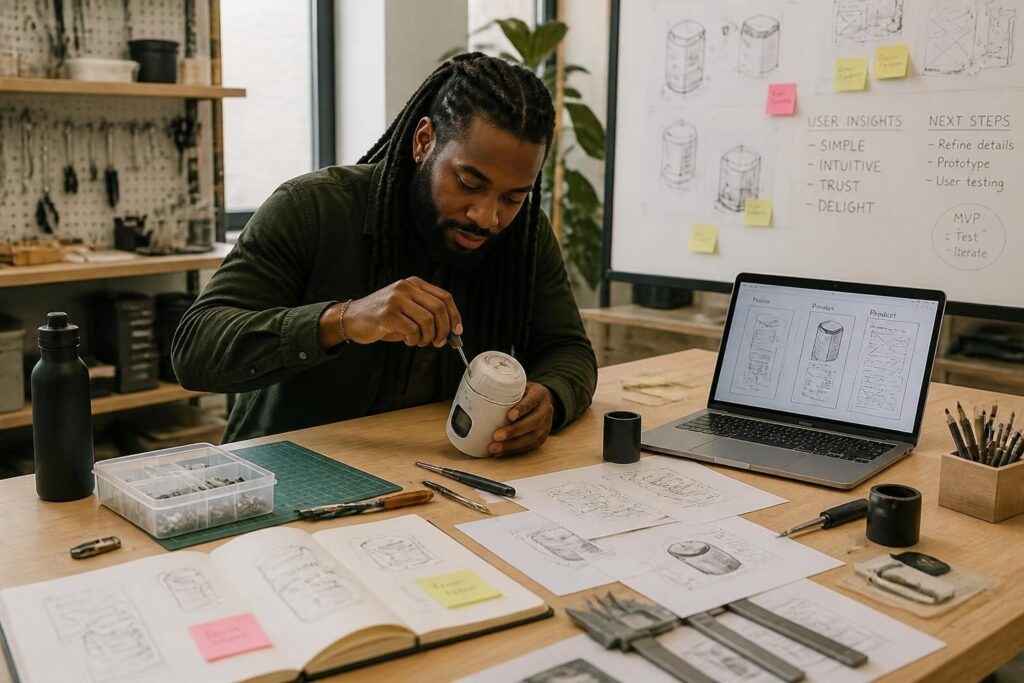
Use Technology Wisely
New tools and trends can improve product design, but they should support the user, not distract from them. AI, automation, and clean interface patterns can improve performance and personalization.
Still, do not follow trends blindly. The best products balance fresh ideas with real usefulness.
Tell the Design Story
A strong product needs a clear story. Explain what it does, why it matters, and who it helps.
That story should appear in your:
- Product copy
- Marketing
- Presentations
- Visual design
When people understand the purpose behind the product, they are more likely to trust it and use it.